




What to Know Before Teaching English in Barcelona
Thinking about moving abroad? Miranda shares six lessons she learned while navigating language barriers, finding work, and building a new life in Barcelona.
Written By: Miranda White | Updated: October 1, 2026
Written By: Miranda White
Updated: October 1, 2026


I remember arriving in Barcelona last year with nothing but a suitcase and a vague idea of what I wanted to do. After completing my online TEFL certification with International TEFL Academy (ITA), I knew I wanted to take advantage of this opportunity to explore the world, and my first stop was Barcelona.
Walking through the airport for the first time, I felt a mix of excitement, nerves, and uncertainty. I had come completely alone, unsure of what to expect. A year later, I have fallen in love with this city. Looking back, my first few months weren’t easy, and there are several things I wish I had known before making the move.
6 Things You Should Know Before Teaching in Barcelona
Hola. From Barcelona. My name is Miranda, and I teach English here. I've been living here for about a year, and I will be taking over the ITA Instagram today. It's a little windy here, so sorry if it's loud. But I love to sit outside in the mornings on my balcony and watch the sunrise. It's about eight fifteen here, and it is just so beautiful. And I have, like, the prettiest views of the city. Like, I cannot complain about anything. So I just sit out here and kind of I'm just gonna drink my coffee and just, like, wake up. So in the next slide, I will tell you a little bit about myself and kinda what the plan is and what the deal is for today, but I'm really excited and show you guys what my life is like here in Barcelona. I'm twenty three years old. I've been living here in Barcelona for almost a year now. It'll be a year in January, which is insane. I'm originally from Richmond, Virginia. I chose to move to Barcelona because I studied abroad when I was in college. Went to Virginia Tech, go Hokies, and I spent like four months in Switzerland and traveling to other countries, and I just fell in love with it. And it just became like kind of a goal of mine to to try to move overseas, like, just just for fun, just to see what would happen, you know? And, best decision I've ever made, I got my, teaching certification online through ITA, which was a really great decision for me. I was able to get it done super fast, and, I moved to Spain six months after finishing. So next, I'm gonna talk a little bit about my job. So I do, like, only private tutoring, here in Barcelona, and I prefer that because most of my students are, like, elementary school or middle school kids. I work, like, once they get out of school. So between, like, three thirty and eight thirty are typically the hours that I work. Today, I have three students. I start at four thirty four thirty, and I end at eight thirty. So it's like not that bad. And then I have my whole, day to do whatever, which is like important for me because I also have a remote job doing travel writing, that I work on during the day. I'm also working on a master's degree, and I'm taking Spanish classes. So I really need time myself to study. So being able to work in the evening has been so perfect, and has been great. So if you have any questions about private tutoring, I am happy to answer them. So the plan for today, I think, first, I'm gonna go on a run this morning. I try to go on a run or go to the gym in the mornings. Not always the best about it, but I try to. The weather looks really nice outside today, so I think I'm gonna go on a run instead of going to the gym. And, then I need to go to the grocery store. And then after that, I need to, come back to my apartment and work on schoolwork for my master's degree. Also do some spanish, spanish homework, study some spanish. Yeah, and then I need to prepare for my classes tonight. Do some lesson planning. So that's the plan, and I'm gonna get ready for my run now. So I will check-in later when things are more exciting. So I'm back from my run. I, also went to the grocery store. I typically shop at because it's the cheapest. The price of groceries, like, never ceases to amaze me here. Compared to the US, it's really cheap, and you can get so much food. So I'm gonna actually do a slide that shows, like, my monthly expenses, and I will show you what I got from the grocery store just so it gives you an idea of how much it really costs to live in Barcelona. So I get a lot of, like, premade food because I just am really busy, and sometimes I don't feel like cooking. So, like, this stuff comes in handy when I don't feel like cooking. So I got, a salad, a tortilla de patatas, some, like, already, like, stuffed pasta I can just put sauce over. I got some tomato sauce, regular pasta, mayonnaise, juice, some tomatoes, some chips, coffee, and blueberries. And this wasn't like a full grocery run because I already have a lot of stuff here. I just wanted more like pre made stuff. So I already have like a lot of meat and stuff in the freezer that I need to cook, but I just mainly went to get like some quick meals for the rest of the week because I have a busy week. So that's what about twenty five euros can get you in Barcelona, so do with that what you will. So I just got home from work. I did not I forgot to show my apartment, so I'm gonna give you a little apartment tour. So when you walk in, we have some shoe stuff, a mirror. And then this is the kitchen. I'm making my tortilla de pistachas. And then we have two bathrooms. This is one of them. It's like a half bathroom. And This is the laundry room, And then this is the and then this is the full bathroom with the shower and everything. And then in here, this is probably my favorite part of the house, is the living room. All of my roommates have clothes drying right now, but I love to sit in here and, like, watch a movie. We also have a nice table so we can, like, eat dinner in here if we want and watch something. And then we have a really big balcony outside, and you can see the city. It's cute. It's a vibe. And, yeah, that's my that's my apartment. And lastly, this is my room. It's very chill. It's pretty small, but my favorite part about my room balcony, because I have my own private balcony. And so this is, like, my little table and chairs. And it's too late today to watch the sunset, but days that I finish work early, especially, like, in the summer when, I wasn't working as much. Like, I would come out here after work and just watch the sunset, and it was so, like, just so beautiful. And even at night, it's so peaceful. You can just see all the lights and the vibes. So, yeah, that's apartment tour. But I will I need to answer a few more questions that I got. So not quite done with the takeover, but we're approaching the end. So I got this question a lot today. And, really, it comes down to, like I used three resources. I used Lingo Bongo, Tus Particulares, and, like, Facebook groups. There are tons of Facebook groups that are, TEFL Barcelona, English teachers in Barcelona, and Lingo Bongo and Tus Classes Particulares are both kind of job boards. So you can post an ad for free and be like, oh, like, you know, I'm looking for students. This is my rate. Here's my contact information and people will contact you. I did have to start my pay lower because I knew I had to get experience and you have to build a reputation with private tutoring, and that's what happened for me. I had three students and then all of a sudden I had a bunch more because after a while, like the families I was working with would refer me to like their friends or other people that they knew. So I talked about this in the last one, but I will say for the pay, my rate right now is seventeen euros an hour. I know a lot of people that charge more, I know people that charge less. When I first started, I charged a lot less, I charged like fourteen, thirteen, and I would do like the first lesson for free, and when I was first starting, I wasn't really focused on making a lot of money because I came with savings, I was just trying to like network and like get, you know, show like the families I was working for that like I could do a good job and then get those referrals because that's really, for me, that's what like got me like so many students because a lot of the students I work with, the families know each other and so they're like, oh, look, I know someone, they're looking for an English tutor, I know someone, and then eventually you have this huge network of all these students that need an English tutor, so that's that. So with this question, my jobs, all of my, I say jobs, but like all of my students, I tutor them in person. I don't like online tutoring. I used to do Preply, and that's something I know a lot of people do, but I just don't like tutoring online but there you totally can if that's what you want. I know some people like on Lingo Bongo and like Tus Classes Particulares like you can advertise like I do online classes too but I find that like a lot of people prefer in person classes, it might be easier unless you're working for like a platform like Preply, but if you're completely independent, I feel like most of my students have preferred to meet in person. Sometimes I'll meet my students online if they're sick or something like in those cases, but for the most part, I only advertise in person because that's just what I prefer and I like going around the city in the afternoon, it's a fun time. This is a really good question because finding housing in Barcelona is really stressful and it can be really difficult. So I do have roommates, I have four roommates, but as you can see in my apartment tour, we have a pretty decent apartment, like we all get along. So living alone was like not super important to me because rent here is expensive, especially if you go into the city center. I live outside of the city center in a neighborhood called San Andreu, and I really love it here because it's quiet, it's more of a local vibe, but I live right next to the metro, so I'm still only like twenty minutes from the center, which is great because I go there like for work every day. But before I lived here, when I first moved to Barcelona, I lived in Cotico or, like, the Gothic Quarter, which is a beautiful area, but it's so many tourists. The rent is so high, and I just would not recommend I I would not recommend that area if I had to, like, say an area I don't like. As for, like, how I found this apartment, I was actually in Barcelona, so I was able to come and, like, look at it and everything, but I found it through a rental company called Loca Barcelona, they rent out tons of apartments around the city and they were really easy to deal with, so I would recommend them just because that's the only experience I really have, but I love the area I live in, the San Andreu neighborhood, it's very safe, it's very quiet, like there's no tourists, it's like more of a local feel, I like a three minute walk to Lido, I also like a ten minute walk to La Macanista, which is like a big shopping mall, which is like really convenient because malls aren't really a thing here in Barcelona, so, being able to be so close to that is really nice, and then I'm like a minute walk to the metro and bus station, so I have four roommates here, but I much prefer living here than where I lived before in the Gothic Quarter. I got this question a couple of times, and maybe I wasn't, like, clear about it in my other videos, but I'm basically, like, self employed, freelancer in Barcelona. All of my students that I have, like, their families just pay me directly. There's no company, there's no one that I work for, it's just me. So I have done a lot of networking in the area and have been able to thankfully like build a caseload of of students that I that I work with on a weekly basis, and that's that's my job. So it's just me. So it is eleven thirty here. I am super, super exhausted. Very sleepy. Long day. I was super busy today, so I tried to show as much as I could. But I hope with answering your questions that it helps some of you a little bit who are thinking about moving here, thinking about teaching English in general, abroad. I love to talk about this stuff. So if you have any other questions, feel free to DM me on my personal Instagram. I'm gonna, like, put it on the screen if you want. And yeah. Also, I like I said before, I do travel writing, so feel free to check out my articles. I'm actually having an article come out soon about, my experience, applying for the student visa, that I came here on. So, that should be a good read. If you're thinking about coming to Spain on a study visa, feel free to check it out. All on my Instagram. But that's it. So from Barcelona. Hi.
1. The Language Barrier is Real
I came to Spain on a study visa and was registered for Spanish classes, which I was initially worried about because I had never seriously learned another language before. These classes built the foundation I needed to feel like I could have a home here. It may seem obvious, but the language barrier is the hardest part about moving overseas. Nothing could have fully prepared me for all the embarrassing moments I had while trying to speak Spanish. It’s a humbling experience and has helped me with my teaching strategy because I now understand what it takes to learn a new language.
2. You’ll Be Hearing Two Languages, Not Just One
One thing that surprised me about Barcelona is that Catalan is widely spoken alongside Spanish. I hadn’t done much research about Catalonia, so in my first few weeks, I quickly realized I was hearing two new languages, not just Spanish. I am still focused on perfecting my Spanish, but if I stay in Catalonia, my next step is to learn at least some Catalan. It’s an important part of the culture here, and I wish I had learned just a few phrases to use when I arrived.
3. Secure Your Savings Before You Go
Be prepared for a slow start when job hunting. I came to Barcelona with savings, and I’m glad I did. It took me a while to find a stable job here. I wasn't expecting it to be as difficult as it was, so it’s important to know it can take time. For me, the payoff was worth the wait. It took me about two months to find a job with a tutoring company where I went to a family’s house once a week for private tutoring sessions. For a while, I was only doing one class a week. I was also able to get a few students on Preply, an online teaching platform, but I really preferred to teach in person.
After I got more experience, I was able to build my own private tutoring caseload. I posted ads online using Tus Clases Particulares, LingoBongo, and Facebook groups to find my own students. It wasn’t until September that I had a stable caseload of around seven students. Through word of mouth and more online posts, I now have 15 private students. Most of my students are children ages 9 to 14, and I go to their homes for lessons, but I also have a few adult students whom I teach online.
4. Visas and School Pay Might Push You to Go Solo
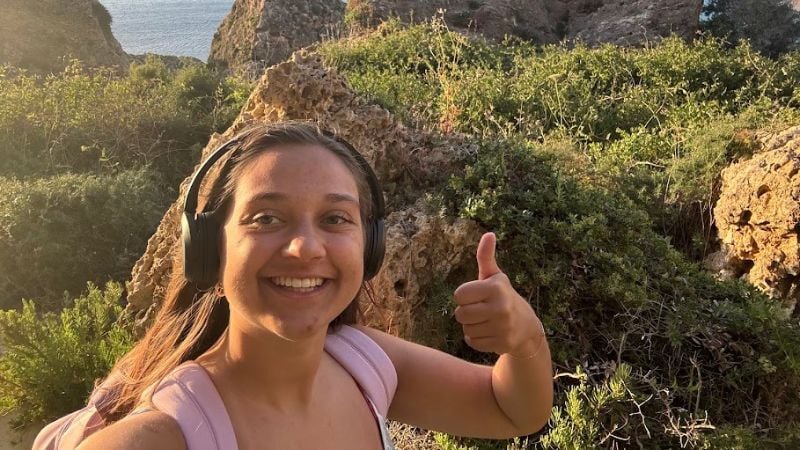
I never worked in a school in Barcelona because the pay seemed low, and most schools I tried to contact would not hire people on a study visa. That’s not to say there aren’t schools out there that will, but for me, I wanted to build something of my own. While it took me longer to establish my own caseload, I prefer teaching privately because I enjoy building one-on-one relationships with my students.
I never would have expected to build my own little tutoring business here, but it has been a great experience so far. I have learned so much not just about teaching but also about marketing, advertising, and running a business in general. I love being my own boss because I’ve been able to plan trips and make my own schedule. Private tutoring is definitely more work, but for me, it was the better option because I prefer the flexibility that self-employment brings.
Watch: How to Build an Online English Teaching Income Webinar
From Barcelona. You're interested in, and we're really excited to talk with you guys today about how to get started teaching English online. All of us have been in your shoes before, so we're gonna tell you a little bit about ourselves, who we are. Then we'll give you a rundown about what we're gonna cover here today so you can stay tuned and be able to learn about all the different things that you could need to know about teaching online. And by the end, we're gonna have your next steps of how to do it yourself. So you're gonna have actual actions that you can take today to get started. Alright? So hi, guys. I am Christie. I am alumni of International TEFL Academy, and I am now an admissions adviser. I got my certificate here from International TEFL Academy eleven years ago. At the end of the year, it's gonna be twelve years already. Time flies when you're having fun. I had never I'd always wanted to go abroad, but I didn't really know much about it. And after graduating from college, I did your typical stereotypical Euro trip and just kind of was meeting people along the way, helping them get around because English is a language that you can speak in most places that you go to get around. And I was sitting at a cafe with someone, and they're like, you know, you can get paid for this. And I was like, what? He's like, you're teaching me English. I was like, I just helped you to order a coffee. He's like, you just taught me English. You're really good at it. And I was like, oh. So I did the Google search, and that's how I found International TEFL Academy. And now I've used my TEFL certificate from here to teach in Spain. I taught in Japan, Brazil, and online. I've taught online from over thirteen different countries, and I am currently here in Brazil right now. I actually tried to do the call from my garden. We were all, like, checking in, getting warmed up, and I had a monkey come visit. And I like, I'm gonna get to show the monkeys. And then next door, they're getting ready for Festa Junina, which is, like, the second biggest event in Brazil. And so all the people are learning the dances and practicing, getting ready. So it was a little loud outside, but really excited to just share this experience and what it's been like with you guys so you can do it for yourselves. So here with Becca and Kenneth as well. So, Becca, why don't you share a little bit more about you? Sure. Well, thank you so much, Christie, and everyone for joining us over your lunch hour. I wish I was in South America. I am a part time resident of Columbia, but I'm in Florida right now, currently at my home in Florida. And I got my certification. I was thinking about it this morning. It's been seven years. I Yeah. International Academy alumni. I took the part time online course along with teaching English online and teaching business English. We'll talk about that pathway in a moment. And started teaching online immediately. Then I went to Costa Rica. I was doing some in person teaching, but still building up an online teaching business from Costa Rica. I moved on to Chile where I lived for over a year, mostly teaching online and doing private tutoring. And I still teach. I just I'm gonna actually show you all my my most recent class photo. I have some students graduating next week. We just wrapped up a school year. I still teach online from my base in Florida, and sometimes I take those students with me to Columbia. Yeah. Thanks, Becca and Christie. So my name is Kenneth, and I kinda look at my life as having two chapters. There's pre TEFL and there's post TEFL, which I'm in that post TEFL phase now and forever going forward. So I kinda like Christy, just the typical route, went to college. And then after I graduated, got into the workforce, I graduated with a business degree, so nothing education related. Never stood in front of a classroom. Didn't even expect to become a teacher. But I was kinda having a quarter life crisis. That's a real thing. And I wasn't sure what direction I wanted to go in career wise. And one day, I was on Instagram, and I saw a friend of mine who I grew up with when I was younger. He was living in Thailand. I just saw him posting pictures, and I just got curious. So I sent him a message, asked him about, like, what is he doing there? He's been there for a long time. Tell me a little bit more. And that was the first time that I ever heard the phrase TEFL. So I just went down a rabbit hole, started researching that same night, and I decided and, like, I'm being serious. I decided within a week that I'm gonna just move across the world and get certified. And I had never traveled outside the country before, So it was a quick turnaround for me. I decided to start off in the Czech Republic. I taught in Prague for one year working with adults. Then while I was there, I started hearing people tell me about opportunities in Asia and how much money you could make there and, also the benefits. So I went to South Korea and started teaching kids. Came back to the US for a few years and got back into the workforce and the business world, and I just started getting restless and decided I gotta go back abroad. So went to Spain, and most recently, I was in Thailand with my partner, and we were teaching there. She was in a school, and I was teaching online. So, that is part of the reason that I'm here today to share my experience as well from my time teaching online. So very excited to to be on this call today and share some guidance with with you guys. And I wanna jump in, Ken, because when we say most recently, two weeks ago, you just came back to us two weeks ago. Like, you were in Thailand. You just got back. Alright. So what we're gonna cover today, you guys, to get started, we're gonna go over some common fears, concerns that are natural. Right? When you're gonna do something different, you're like, what does this all entail? We're gonna go over some common ones for you, and I wanna hear, in the chat about kinda what some fears and concerns are that you guys are having. Then we're gonna go into what the current online teaching market looks like right now. Then we're gonna tell you why should you should teach online and share more about our own stories and why we decided to get started teaching online. And then we're gonna go into a nice, easy, simple five step plan of how you can get started. And like I promised, we're gonna give you actionable steps you can take today. Then at the end, we're gonna do the raffle. We're going to do a q and a, get any common questions that were popping up, big things. We're gonna have Kenneth come in and share what he was realizing so we can share that with all of you. Alright? So go ahead and type in the chat. What are some common fear or what are some fears that are going on for you right now as you're looking into teaching online? Some common fears that we hear all the time are people who feel like they're old too old to teach online or abroad. But we have alumni from all ages. We have people all the way from eighteen to eighty five who are teaching English. So there's really opportunities for everyone. Some people don't have a degree, and they're like, teaching in the US, you have to have at least a degree. There's opportunities, teaching online as well as abroad, that do not require you to have a degree. Okay? We're gonna go into more detail about that too. People are like, I've never had teaching experience. Like, Kenneth mentioned earlier. Right? Like, I had no idea what it was like having a classroom or managing that. But the good news is is with the TEFL certification that we offer here with International TEFL Academy, it is designed for people who are first time teachers, and we even have people who are tenured doing this. So it really is designed to help you be confident and prepared teaching English to non native English speakers. Yeah. And I on my calls, the degree thing and the age comes up a lot. I wanna also mention, I'm in my fifties, so I'm what's considered a mature teacher. My background was in business. I had no experience teaching. Age is not a concern. And as far as the degree goes, you know, that's it's valid. There are some countries that are very strict. There are some legacy schools in China that are gonna wanna see that. But in general, I think the online world has really moved on. And I say this as someone who was a recruiter for my online English school in Central America. I I wanted to see that someone had at least a practicum. You know, I will admit I was biased. If I saw it was an ITA alum, I pretty much made up my mind to hire them before the interview. But I would look for, you know, what type of certification, where did they go to school, did they have student teaching, did they have a specialization? What what I wanted to know and what other hiring managers want to know is that you can that you know how to teach, that you know how to command attention, especially for online teaching, not so much that you sat in a lecture hall for four years and learned a bunch of theory. And then also, there's the power of the niche. And we're gonna go into this later, but there are ways that you can leverage that past life and and professional experience. And then another doubt that I hear is, well, how demand is this? You know, I've I've heard that online teaching, the market is really saturated. And, again, this is this is anecdotal. But at my school, we were a small academy, online academy, about twelve teachers. I was constantly interviewing. I had ads running all the time. I was giving interviews every day. I visited the ITA Costa Rica school once a month to directly recruit teachers. And it wasn't because it was a bad place to work. It was because there's just a lot of turnover. The teachers this field is something for people in transition. They're on the move. Maybe they're changing countries. They've taken a full time job at another school. So I could be fully staffed one week and then need to hire five teachers the next. And, also, something that has really changed since my time in the field, really in the field because now I'm just doing it part time, is that now, you know, the general English teacher is it's a commodity, but a specialty coach, that's that's a scarcity. And, you know, I'll admit now, I'm just doing this part time. I'm in my comfort zone. I've gone back to being a generalist, but I worked with a lot of HR professionals, data scientists, even some government officials. And that's where you can make more money once you create your niche, once you specialize. And this market just last year grew by about six billion. And that's not because people want to learn English as a hobby. It's because they can't afford not to speak English in order to do their job, to get into the school that they want, or possibly even for for visas. No. Definitely. It's so true. And another thing I hear people talking about on my calls every day is what is the market looking like with AI? Like, everyone just uses a translator. Like, why do people have to learn? And it's like, because people have to use it. And people are learning a language really at the core to build connections. People want that human connection. So if you're just practicing with a robot, you don't build confidence that way. So you're never gonna build a connection. A student would never learn how to actually speak if they don't have that human interaction. So AI within TEFL is really been an amazing tool for teachers to use. It really does take out the boring parts of the job that you don't wanna do, and it lets you spend more quality time with your students. Like Becca was saying, there's those different niches. I know some people who have done, like, TEFL for Brazilian pilots. Like, I know people who have done like, have a nursing background and are able to support people. They know how to do their jobs, but they need to build their confidence to actually use that. And I actually even taught for the first virtual reality English teaching company, which was super cool because we have this virtual world to be able to be in and I got to take them to the train station. And it was a Japanese student who was gonna be going abroad to do a conference. And he was like, I wanna buy my wife a gift, but I don't know how to do that. So I gotta, like, take him, like, and practice the script of what he would say. And so he was able to go and confidently go shopping and little things like that. So they're learning it professionally, but they're also learning it in the day to day lives to be able to have relationships with romantic partners, family members. There's so many different reasons, and AI can't help with that. That's only something that humans can do. Yeah. I had a I had a that reminds me. I had a software engineer, and he one month, he said, listen. I'm taking my son to New York City. I've never been there. Help. Like, help me get from LaGuardia to oh, no. It was it was Newark. Help me get to Newark to my hotel in Manhattan and show my son a good time. And for a month, we didn't study engineering. We just looked at maps of New York and plotted it out step by step. They had an amazing time. Yeah. Yeah. And I actually just saw Benjim say something in the chat right now. The AI is still figuring out colloquial speech. That's such a good point because, like, there's so many, like, phrasal verbs and so many colloquial things that people say, and a robot would have no idea. So but yeah. So why should you start teaching English? It really is the easiest way to make money from anywhere you are in the world. Like I said, I've been to over thirteen countries over the last few years just by teaching online. It's so flexible. Like Becca said earlier, there's a huge growing demand for online learning right now. People want teachers, but they're in different places. They don't have the time to be able to go, being able to do it from their comfort of their home, their office. Super easy. It gives you the flexibility to be able to choose your working hours. I know there were times for me that some platforms you can open and close your own availability. There were times I didn't have a student, and someone invited me to go on a boat. And I was like, you bet I'm going on that boat. I closed that availability, and I hopped on that boat and went island hopping. It was great. So it is flexible, especially for people who are stay at home parents and looking for something that they can take care of their kids. It's also something that's supportive with that. So you can still do it from home as well. Like I said earlier, great side income, side gig, making some extra cash flow with today's economy that we're in right now. Also, like Becca said, it's a really good career change opportunity. If you have a background in certain fields, but you're just feeling burnt out, this is a great way to use that previous experience and not feel like you're starting all over again. You're just shifting and navigating into a way to support people in a different way even if they're working in that field that you have been working in. It helps build classroom experience as well for future jobs. If you're wanting to go abroad, you need to save up some extra cash to be able to get over there. I tell everyone, start teaching online because it also builds up your experience. When I went to go to Japan, I ended up needing to apply for a job. I missed the application date by a couple days because I didn't listen to my adviser. Don't make that mistake. Had to wait a whole another year, but I started teaching. And when I got the job, they were like, you only got it because you had experience before. One of my friends in the program applied five years before she finally got into that com program. So having that previous experience really does help you, not just with saving money. So, you really just need Internet and Wi Fi. You're good to go, along with having that TEFL certification. So as soon as you're TEFL certified, you can already be getting on those platforms. We're gonna be going into more detail here on that in just a minute for you as well. So lots of reasons to be doing it. So let's talk a little bit about how you get there now. Right? So we've all had really cool experiences being able to do it from all over. Actually, really quick. Becca, why did you decide to start teaching online? I know that you said that you were doing something completely different before. Well, I knew I TEFL is something I thought about for for decades, but I just life happened. It was very difficult me. It does get more difficult as you get older. And when I talked to my adviser, Erica, I was like, I I feel it's I've been thinking about this twenty years. And I just I feel like this is something I need to do, but I'm not quite sure where I want to go. Is anybody even gonna hire me? All of those fears. And she said, well, why don't you teach online? If you're afraid but you want the certificate, why don't you just start and just teach online? You don't have to go anywhere. And it was the first time I'd even thought of it. I didn't know that I didn't know it was a thing. And so my it made me feel confident in enrolling in the course because I'm like, okay. So I'm just gonna learn this skill. As long as I make a thousand, fifteen hundred bucks, I'll feel like, you know, I've got a return on my tuition investment, but it was a really low risk way to to convince myself to do it. And then I realized after a while, wait a minute. I'm making enough teaching online. I think I could move to Central America and pay my bills. It was a financial safety net. So I'm so grateful to her for just introducing that during our first discovery call. It's it's what gave me the confidence to move forward with enrolling, really. Yeah. No. Definitely. It's so nice to hear as well because I know I talked to a lot of people who have been in similar boats as you too. Yeah. So, Kenneth, do you have time to pop in? Why did you decide to start teaching online? Yeah. Yeah. Actually, so it was a hard pivot for me. So as we mentioned earlier, I was in Thailand with my partner, and the plan was for both of us to teach in person. And she got a good offer, a good position in a school that she was happy with. The the offers that I got, I wasn't too content with. Maybe I'm just picky at this stage since I've taught abroad a few times. That was her first time teaching abroad. But be for that reason, I decided to turn down the in person offers that I got, and I knew I can just find positions online pretty easily. So, so that's a testament to how quick the turnaround can be For teaching online and the actual job prospects out there. I know that's a question that's come up a few times in the q and a. How good is the market? What are the job prospects like? Well, look what happened to me. I made a quick turnaround, and within about a week or two, I started getting my first few students. And the only reason it even took that long was because I had to interview with a few schools. They had to do a bit of checking, like background check and whatnot on me, or I'd have to submit a demo video, showcasing my teaching skills. So after I got all of that out of the way, then I was able to start teaching online officially on the on the platforms. And I did that for several months throughout the whole time that we were in Thailand, and that allowed me to stay afloat. And it gave me the flexibility that I'm used to already because as an adviser with ITA, I work remotely. So it was nice to be able to continue that lifestyle while abroad in Thailand. And financially, I mean, obviously, the cost of living in Thailand was much lower than what I'm used to here in Chicago. So the teaching online salary and doing it as a couple, we were more than comfortable. We're able to travel throughout the whole country and around Asia. We went to seven countries in the six months that we were there. I had so much fun following your trip, and I didn't realize until recently you were teaching online. So I was like, how is he doing this? Where is his school? He's like, in Japan this week. I'm like, what what is Ken doing? Yeah. Yeah. Flexibility. That's that's the game with it. It really is. It really is. Because for me, I was teaching in Spain when I first got started. And when I was leaving, I had a lot of students who were like, we don't want you to leave. Will you teach us online? And I was like, this was years ago before teaching online was, like, a thing before there were platforms. And I was like, I don't wanna have to figure out how to do all of that. Like, how to figure out how to get payments and how to figure out how to because there was only PayPal back then. Like, there wasn't any options like there is now. And so I fought it for, like, five years. Every time I would go somewhere and leave, students wanted to teach on wanted me to stay with them online. And I fought it and I fought it because I was like, I'm an in person person. I'm an in person person. And then when I finally decided to take the plunge, I was like, why have I been waiting so long? This gives you so much flexibility and it's so nice. And I never felt like I didn't have a human connection even though it was on the camera. In fact, I felt like I was traveling to places that I've never been to because my students were in these places, and I felt like I was there. It it's often more intimate because I most of my students, I know their family. I know their pets. Their their cats join the class. You know, children in the background. Sometimes the kids join in, husbands, and I it it's it's I have found much richer relationship and experience than when you're in a classroom. Much more personal. Yep. Definitely. Definitely. Questions in the chat. If you do have questions you want answers to, send them to Kenneth in the q and a. Don't forget that. But I love seeing everyone interacting. I see everyone's excited to find out things about timeline and money and different platforms. We're going into that right now. Okay? Stay tight. We're gonna give you that five step plan, super simple, for you to start teaching English online from start to finish. Alright? So the first step is getting TEFL certified. We're gonna jump on into that. We're gonna go into what to look for when you're shopping, the best courses for online in particular. Then we're gonna go over the different types of methods that you can teach online. We're gonna go into what it looks like finding jobs, the different types of platforms that are out there. Then we're gonna go into making sure you have everything that you need to be running a online classroom smoothly. And then we're gonna give you that game plan and the next step you need to start. Okay? So step one, getting TEFL certified. And not all classes are the same. I I talk to prospective students every day, and something that comes up a lot is they say, hey. You know, your your class sounds great, but I found a course, and it was five hundred bucks, and I think I'm gonna do that instead. And often, two or three months later, they're scheduling another call with me, and they say, okay. I took that class, and I don't know what to do. I don't know how to find a job. I don't feel ready to teach. I when I'm not in South America, I do Rosetta Stone to keep my Spanish up. And, you know, it's a good I log in. I've got my modules. It's checking a box. And I've thought before as I'm working through those modules, I think that's what those, like, cheap budget courses are probably like. Like, you're you're doing it, and you're checking the box. Could I do Rosetta Stone and actually live my life in Spanish? Probably not. So invest in yourself. I I went through this exercise when I was evaluating courses. I was also tempted in thinking, do I really wanna spend, you know, fifteen hundred dollars? And I thought, yeah. Heck, yeah. I do. I'm moving to another country. I've never been a teacher. I I want a professor. I want to be in a professor led class. I want feedback from my professor. Emily was amazing. World class education. And then for me, the big unknown was I don't know how to find a job in another country. I don't know anybody. I don't even know I don't know where I want to go. I don't know. Is anybody gonna take me? How do I do it? And so having student affairs, a live person, not just a bot, but actually somebody that I could schedule a call with, somebody to help to show show me opportunities all over the world to give me advice on where I probably would be the most competitive, help me with my resume and cover letter. That's that in online teaching ultimately is what gave me the the confidence to move forward. So, you know, I I I hear you. I I get this on calls all the time. You know, those budget courses, I think, are good if you you need a certificate quickly or maybe just a taste to see what I like what I like to do this, you know, go for it. But if you're really serious and you want to turn this into a career, if you want to move to another country, especially invest in yourself. It's gonna pay off. For me, it's it's paid off month month after month. Yeah. For me, when I was doing my shopping, I think the major thing that, like, stood out to me was, like, do I wanna come out of this just with a piece of paper, or do I wanna come out of this prepared and ready for the full experience? Because every single person here with International TEFL Academy has taught themselves. So it's like they can teach and they can do, and that's something that can be really hard to find. And so that was, for me, like, the thing that was, like, no brainer. I'd rather invest in myself and my education and my future to have a smooth process and not not turn out like one of the horror stories on Reddit. Yeah. I had to fire some teachers. Sadly, it was horrible for me, and it was horrible for them. And I it just they weren't they weren't ready. They had a piece of paper, but they weren't ready to step into a classroom. And even teaching online, a virtual classroom, often you're working for a school. That's a business. It's a often a private language academy or a platform. And if you get bad reviews, in our case, you know, I I would try coaching, but sometimes there was just too much of a learning curve. Yeah. Yep. Totally. Alright, guys. So what I personally recommend for the TEFL courses you're gonna jump into since you're thinking teaching online in particular. This here is our teach English online bundle. Okay? So I like to think of the eleven week part time course as your major, and then we have these specialty courses that are like your minor within TEFL. They go into the different niches. So one hundred level information versus two hundred level information. So to get started, most people looking to teach online are people who are still working, needing to save up more money for start up costs for things, needing to still be working. You don't have a bunch of savings saved up, or you just don't have the time or the energy to put in forty plus hours a week just to a course. So I would say majority of people do choose this eleven week online course because it only requires eight to twelve hours of work per week. You have a live professor who has their master's, if not PhD, within TEFL TESL, and they have experience themself. They host lectures multiple times a week, but it's not mandatory. So if you're working or lifing, zero stress, you get the recordings to watch in your own time. You'll just have assignments due Fridays and Sundays to stay on track to complete it within the eleven weeks so it doesn't turn out like my gym membership that I never go to. And other as long as you feel like you can fit in those eight to twelve hours of work per week, it's super flexible. Definitely doable for people who have busy lives as well, but wanna work towards this long term. And not even that long term. You're finished in eleven weeks. Right? It'll people always are like, I wanna have it done as soon as possible. But then when they're at that final week, they're like, how is that already eleven weeks? It feels like it was a month. So it really time flies. But yes. So it's a hundred and seventy hours total. Becca earlier was mentioning practicum. Practice teaching is something that is required by international accreditation standards and by future employers. So that is something that we are very specific about including in our courses, but we like to leave it flexible so that you're also getting practicum that's beneficial for you and what your particular goals are. So if you know you only wanna teach online, you can do those practice teaching hours online. If you wanna go abroad, you can do some in person. You can even do both to get a mix and a feel to see what's gonna be the best fit for you. So that is the eleven week course in a nutshell. And included in that tuition is that lifelong job search guidance. So you do have support for life. I did test those boundaries over the last eleven years because every year, like Beck was saying, I hop to a different country. And I reached out. My adviser was able to give me the resources I needed to support me. So once you complete that eleven week course, we have those two week part time specialty courses you can jump into. These are the two that I recommend for teaching online in particularly because they didn't have these courses when I got started. Like I said, when I started teaching online, it wasn't a thing. But what took me a year and a half to figure out by myself, we've now put into a two week part time course. So you can I saw people in the chat earlier saying, like, I don't know if I'm gonna be able to get an income from this? Is it gonna be worth it? I've noticed that people who bundle on this teach English online specialty course get return on investment a lot faster because you have a professor that helps you create your profile, helps you create your intro video. So it looks like what the companies want, the students want, the algorithm wants, all that. So you're just getting clientele way faster with that course. You also have it on your resume. And with AI, it scans for keywords. So if you have these extra certifications, it's something that's gonna benefit you not only building your confidence in those areas, but it's also something that's gonna get you those jobs. So these courses are twelve to fifteen hours a week. They're only thirty hours, so you can get them done quickly. Same level professors, university level education, same structure as the eleven weeks, you can flow into it nice and easily. Practicum is not mandatory for these short ones. You already got it done for the eleven week, and we like to keep all of our classes small. So there's never more than twenty students. You do get personalized feedback from your professor about everything you're going through. Okay? The tutoring course, to touch base about what that one's about. A lot of people start on online platforms, and then, like Becca said, you go off on your own. You get comfortable. You have your structure. You have your niche. This tutoring course helps you with that. It helps you define your niche within TEFL. It helps you find clients, how to market yourself. You're gonna have your own mini tutoring business plan by the end of this. And I even know people who are really who have taken this course, and they're really into, once they go abroad, starting blogs, starting, like, creating content, and they use the skills that they learn in the tutoring course to start businesses that are other things other than TEFL and have a balance between the two as well. So Okay. Well, let's now dive into the how. And once you've gotten this certification, now you need to decide how how do I wanna do this? There are different ways you can approach online teaching. So I I love structure, and I love consistency. So this first method is kind of is where I ended up staying, and that is with online schools. I am I'm ten ninety nine or a contractor, but I'm essentially I'm an employee. I sign a contract. I have the same students at the same time every week. And for me, that's just it's just where I'm comfortable. You can do a hybrid. There are also I I like to think of them as like Uber for teaching. There are these marketplaces, and we're gonna dive into those. But you have a profile that I did. Yeah. And you you have a profile when you're available. You're logged in to teach. It does allow you to maybe charge a little bit more. You know, I know by signing a contract, maybe I could be making a little more money, but it's it's a way for you to have complete autonomy. And it's also most teachers that I know did both. They had a few classes, you know, online with schools every week just to know that their expenses would be covered. They could pay their bills, but then they went out there on those marketplaces as well. And I I really do think that the online schools are a great place to start for new grads. I that's where I started, and I ended up staying. It's often where you have lesson materials provided to you and a lot of different resources. I've been able to build up a vast library of different resources from various schools that I've worked for. There's little lesson planning. You're not doing billing. You know, the the pay can be lower. You know, usually, I would say entry level, depending on where the school is located, can be between twelve and, you know, eighteen, sometimes up to twenty five an hour depending again on the country where the school is located. If you have a specialization, as a new teacher, probably looking to make more of, like, twenty to twenty five an hour. And you're guaranteed the hours. That's what meant a lot to me. I wanted to know that I had at least ten teaching hours a week so I could pay my bills when I was in Costa Rica. There's not a lot of unpaid time or admin. There's usually a support staff to reach out to. But the the con is that you're you're locked into a rate. You know, I've signed a contract. It's for six months or that semester. I'm not going to be able to make more, and there's not a lot of brand ownership. I have had the opportunity to work for some schools where I did my own lesson planning. And even though it's more work, I actually I prefer it. I I own that lesson. I've been able to be creative, and it's just something that I I feel like I thrive in that arena now with lesson planning. And in the beginning, when I finished my TEFL course, I used the template that, of course, we we learned how to do in class, and I would spend an hour on my lesson plan. I don't wanna scare anyone when I say I do lesson planning now. It's like ten minutes. I mean, I I can do I can knock out a lesson plan in about about five minutes if you give me a topic, if you give me a profile of a student, but I just I I enjoy it so much. And then, Christy, I think you've been on more of the marketplaces, so I thought I would toss the baton back to you to talk more about these marketplaces. Absolutely. Yes. Would love to. So, yeah, I like the personal brand of the marketplace. I like doing more of that individuality, really supporting students with what they specifically want. So for me, a big thing that I was helping people with was confidence. That's, like, something that all of my students came back to me with was I can't speak English. And I was like, yeah. You can. And so I found things that were more interesting to them, more things that would benefit them in particular. And so I was able to go at it a more personal route, which is what I liked about it. Same thing with lesson plans for me too. I love doing it. There were sometimes I worked on other platforms where they had everything designed for you and they had the lesson plan. And certain phases of my life, that was better because here in Latin America, I was teaching in person to be able to integrate with the community. But teaching online, the US dollar goes way further. So I just worked a couple hours on the weekends and that paid my rent, and then the rest of my money was just fun money. So there it really can depend too on which platform is right for you at different stages. It doesn't mean you have to just stick with one. But this one, you can choose your pay, so people can get started with fifteen to twenty two dollars an hour. But once you really niche in, like we were talking about, we're gonna go into two, people are getting more thirty to fifty dollars an hour depending on what your niche is. So the pros about this is that you can raise your rates as you go. Kenneth, do you have a second to talk about that? Because I know you had a really good story about that. Sorry. Yeah. Essentially, what I did was I started fairly low just to get my foot in the door, just to get some students quickly. I was working on italki, actually. That was the platform. So I started just around, I think, about nineteen an hour, I would say. And then every time that I received a new student, I raised my rate by a dollar. So that was a strategy that a friend of mine who had been teaching online for a year recommended to me. I know she she's up to about forty an hour now, and she's doing really well. And, also, I wanna add, she does not have a bachelor's degree, and she's doing that well. So but, anyway, it was a it a good strategy that she gave me. So I did that throughout the the few months that I was in Thailand, and that was effective. I didn't lose any students by me raising my rates. I think the platforms sometimes I could be wrong, but sometimes they they lock in the rates for students who already enrolled with you before you started increasing your rates. I think they do that. So those students are kinda grandfathered in to whatever they paid originally, but any new students coming in would pay whatever the new rate is that you set. So it was a good strategy that worked for me. Yeah. No. And I loved that you shared that. So that's why I was like, I wanted him to share that with everyone. So thanks because I think that's an awesome pro tip. But, yeah, with the marketplaces, you have that scalability. But the thing is is they do take a commission. A lot of people don't like that. But that's where I was talking about going into tutoring, going off on your own so that then you don't have to worry about them taking out the commission because they're doing your marketing for you, then you go off into having your own independent business. Right? The direct student model where you have that one to one. You are able to create your own classroom vibe. You get to do whatever you want. You're your own boss. So I know a lot of people I've been talking to are like, I'm just tired of feeling burnt out. I wanna work for myself. We're really transitioning into something different right now. And so doing tutoring and private tutoring, having your own business is a great way. And like Kenneth said, you can still use this strategy with that, starting low, going high as you build up your clientele. There's even some corporate, like, schools and companies. I know one of my teachers that I used to teach with, she was the English teacher for every, like, corporate official for Shell in Latin America. And she was teaching all of them their English. So she works for herself. She has her own business. They were contracting her. So there's different ways that that can look as well. So you make the most money this way Yeah. Because you don't have the commission going out, but you do have to do your own marketing and have to do clients yourself. So if that's something that you're interested in, then it's a really good way to do it. And we do have support in helping you figure out how to go about that to be successful as well. And I also some of that happens. That growth also happens organically. I found after a few semesters of teaching, I had had dozens after a few years, hundreds of students, and I started to get messages on WhatsApp from random people saying, hey. I'm so and so's cousin or friend, and they told me time. Yeah. Like, that you were an English teacher. Or when I was living in Chile, Clearly, I was a gringa, and people would just approach me and say, oh my god. There's they found out there was an English teacher in the neighborhood. Can you tutor my kid, or can you help me with this business project that I'm working on? So I I had intended to build a website and do some social media marketing, and I never had to. I had enough referrals to keep going. Huge. Yeah. Yeah. I actually have found students at Carnival in Brazil. Yeah. Literally, like, walking down the street, like, dancing, and people are like, you're American? You speak English. You're a native English speaker. You need to teach me. Yes. And I actually that's why I went to France is because one of my old students, I helped her prepare for an interview for an internship to study a guy that she was studying up to her PhD, got an internship with him, and now she's hosting water purification conferences all over the world. And now she's working out in France supporting them with that. So you help people get to live dreams that they never thought that they could live as well. So it's super rewarding. And you build relationships. I had a free place to stay in France now. Right. So but, yeah, niching in is huge because a lot of people are looking to improve their businesses, and they need to speak English in order to do that. So like I mentioned earlier, there's some people who work in nursing, and they niche into that. Like I mentioned earlier too, like English for Brazilian pilots, like, helping focusing on the vocabulary and structure of that. Interview prep is huge. I feel like majority of my tutoring has been a lot of interview preparation. And I've also done a lot of tutoring for, like, HR representatives and stuff like that. There's just so many different fields that if you have a background, you're able to support people better with. And, Christy, I do wanna jump in. I'm looking at the time, and I see we're almost out of time. No. Talk about the eleven week course flies. This webcast webcast flies. I thought we could probably quickly cover some of the specialties, but then also maybe bring Kenneth in to see if we've had any good questions. Yeah. I I took teaching English online. And, Ken, when you mentioned that it it took a few extra days for you to find your jobs because you had to do your video, I thought, oh, he didn't take teaching English online. I I took it. And so when I finished that course, I had a very professional intro video to submit with my application materials. I felt I had gotten feedback from my professor as how to appear on camera because those interviews, they are they are looking to see, can this person command attention for an hour? And I was hired immediately. I started applying for jobs on a Thursday night. I had a flight to Costa Rica on a Saturday. I applied for a few jobs on Thursday night. I was we included my materials, my videos, was contacted by schools on Friday, set up interviews for Monday, and was already in training on Tuesday. So I I credit teaching English online with helping me just jump to the head of the line. And then I also took teaching business English because I had a business background or have a business background, and I really didn't wanna work with kids. I just I prefer working with adults. And so teaching business English allows you to understand the the needs. You start with a needs analysis, and you find out, okay. What is the goal of this student, and how quickly do we have to accomplish this goal? So it helps you adapt to to all of their needs. Yep. Exactly. I that's like the number one niche that people get into, right, is that business English. Yep. I would say the other one that's really popular that we also have a specialty course for that ugh. I wish I had this. Because the first time I started lesson planning for teaching English proficiency tests, I would say, like, my lesson planning took eight hours to build my first one because there's so many resources out there, and people have to pass these English proficiency tests in order to get jobs, get visas, get into universities, so many different things. So they'll pay good money because if they don't pass it, they have to pay money to take it again until they eventually get it so that they can have the job that they want. So I would say this is the highest pay rate, especially for teaching online. So if you are one of the people who was in the chat saying you're not worried about if you're gonna get return on investment and all of that, this is a niche that you really want to look into. And the also the test prep, some of the English proficiency tests, they changed within this last year, and so we updated this course. So it is ready to help you with reliable resources because back in the day, I would just, like, search and, like, do a thing, but those skills and those practices aren't even what they're doing anymore. So we have recently updated this to make sure that you are properly prepared. You know the resources that are going to help you support your students in them being successful in that. And you can get twenty five. I've seen people after a few years getting fifty dollars an hour for it. So Yeah. Yeah. Ken, is there have there been any themes in the q and a? Yes. Yes. Absolutely. So a good question that I got was how long does it take to build up your your book of business essentially online? So I'm sure, you know, each of us has a different answer. I only taught online for a few months, but I can say and I was doing it very part time. And and and I highlight that because teaching online does require some hustle and availability. The more you make yourself available, then the more students will book with you. So that's something to keep in mind. I know I got more students every every month that passed. I had more students than the than the previous month. So I don't know. I started teaching students immediately in my first week on my first platform. I was teaching on two platforms, one, iTalki, and then another platform that was geared towards Korean students, all adults. And I was teaching from week one, but every single every month, my amount of students increased. What what about you two? Yeah. I I didn't quit my day job at first. So I was still living in the US, and I was just dabbling in it. But once I decided to get serious, I it took me about a semester because what I found, because I worked for structured schools, is that they would hire me just to see, like, how's this gonna work? So they say, okay. We have we have one class. So I was working for two or three schools doing one class. And then after that semester, getting good feedback from my students, suddenly, it was, what do you wanna do? How many classes do you want? So it exploded. After the first semester, it went from about four classes to me turning down. I think I was ten plus classes turning down work because I couldn't fit it in. Yeah. Yeah. That's amazing. For me, I was teaching in Japan, and I was gonna be going to Brazil. But in between the school terms, there was a gap. And so I was like, I'm just gonna go and travel and start teaching online, but I had a solid savings because I had just been teaching in Asia where you're able to save a lot. So it wasn't like I and I wanted to enjoy myself too. So I had very, like, I had very scattered availability. Like, I mentioned the time about that I wanted to jump on a boat. So it wasn't, a time that was, like, super me wanting to find clients. But I would say after three months, I felt like I had the amount of clientele that I was looking for to then know I had a base income when I was going to Latin America to start looking for jobs there. Another question that popped up pretty often is, will I be limited on teaching without a degree or without a bachelor's degree? I know we covered that earlier in the presentation, but it's a quick and easy answer. No. You won't be limited at all. I mean, your TEFL certificate can hold more weight than your bachelor's degree. You know, you the experience that you even get out the gate with your TEFL through your practicum, that's gonna be valuable. So if you don't have a bachelor's degree, please do not worry. There are tons of platforms that will hire you that don't even ask you to show proof of your degree. I don't even think I was asked for my degree. I I actually, I wasn't. I wasn't asked for my degree, and I do have one. So, yeah, don't worry about it. Well and and often, the TEFL can can hold more weight, can carry more weight because I had a few teachers apply who were awesome. Awesome. I had somebody with a master's, but no TEFL. And I went to my admin, and I'm like, I'm desperate. I need teachers. And she said, no. They don't have TEFL. This is somewhat a master's that I had to turn down because they didn't have TEFL. So it's often it's it's they they want to understand that you're ready to teach. Yeah. Yeah. Yeah. Remember, your TEFL trains you to be able to teach the English language. Yeah. And and that's that's what the platforms that that that's what the schools that's what they that's what the students that's what they care about. Can you teach me English? And your TEFL says, yes. You can. Yep. Exactly. So there is a button on the top there. We're gonna give you your next steps right now, but I know we're running really short on time. But we're gonna give you that those actual steps that we promised you. But we also wanna know what you're thinking about this, event. So please click that button and let us know how you're feeling about this so we know because we have these events every two weeks. And so we're constantly looking for ways to improve them to help you guys learn more facts about different areas. So we have in person opportune we have in person webinars as well as online in different topics. So let us know what you're thinking so we can continue hosting these fun events for you guys. Your advisers are going to be your best point of contact. Everyone who's here who has an international TEFL Academy adviser, all three of us are advisers here. We might be yours or there might be others. But we've all taught English abroad. A lot of us have taught online as well, so we're really able to support you in building a game plan. We've helped over fifty thousand alumni find jobs across over eighty different countries and all online platforms. So we're here to set you up with the best courses for you based on your specific situation and goals. So please reach out to us so we can support you with that. You have us to get started. You'll have your professor to guide you through the course, give you personal interaction and advice, and then you'll have a student affairs adviser as well to support you in figuring out any details or questions. We review resumes since they look different internationally. We review contracts internationally since they look different. So we really are here for you in the long run. So please reach out to us because we love talking with you, learning about your stories, hearing about what you're thinking to be able to make that happen.
5. Come for the Lifestyle, Not the Paycheck
Now that I have been doing this for a year, the main thing I wish I had known is that you will not become rich teaching English in Barcelona. I chose to complete my TEFL certificate because I had some experience in education, and I wanted to travel and have new experiences. The pay is not the highest in Spain compared to other countries. Coming with ample savings was super important for me until I was able to find my footing in the teaching world. With private teaching, I make enough money to live a decent life here, and I’m able to travel as well.
The key thing about teaching in Spain is that people don’t move here to make more money; they move here for the culture and a slower pace of life. Coming from the US, I was used to higher wages, but the trade-off has been worth it for me. I have discovered that I prefer the lifestyle here over the money I could earn in the US. The cultural experiences I’ve had over the past year have been far more important to me than earning a huge salary. You have to decide whether you prefer culture and experiences to material things, which is a shift from the culture in the US.

6. The Growing Pains Are Hard, But Worth the Leap
Looking back at the nervous girl who arrived here last year, I can say it has been more than worth it for me. The advice I’d give to new graduates is to take the leap and try to build a new life overseas. There will be growing pains and times when you think about going home; for me, I definitely had moments where I wondered if it was all worth it. If you give it time, you may discover a new country will start to feel like home. I have built an incredible community here in Barcelona and have had opportunities to do things I never would have if I stayed in the US. The transition is difficult, but in the end, you get to decide if it’s worth it. You will never know what the world holds for you if you don’t take the first leap, and I am so glad I did.
Go further:
- Requirements to teach English in Spain
- Spain Government English Teaching Programs
- ITA's Ultimate Spain Guide
- How Much Money Can You Make Teaching English Online?
Posted In: Teach English in Spain, Barcelona, Teach English Abroad

Miranda White
Miranda White is a 23-year-old from Colonial Heights, Virginia, with a BA in Political Science. She was a high school career counselor for 1 year before moving overseas to Barcelona, Spain.
Want to Learn More About Teaching English Abroad & Online?
Request a free brochure or call 773-634-9900 to speak with an expert advisor about all aspects of TEFL certification and teaching English abroad or online, including the hiring process, salaries, visas, TEFL class options, job placement assistance and more.