

Curious about the requirements for teaching English in South Korea? Learn the qualifications you need to teach English in South Korea including education, citizenship, visa, and more.
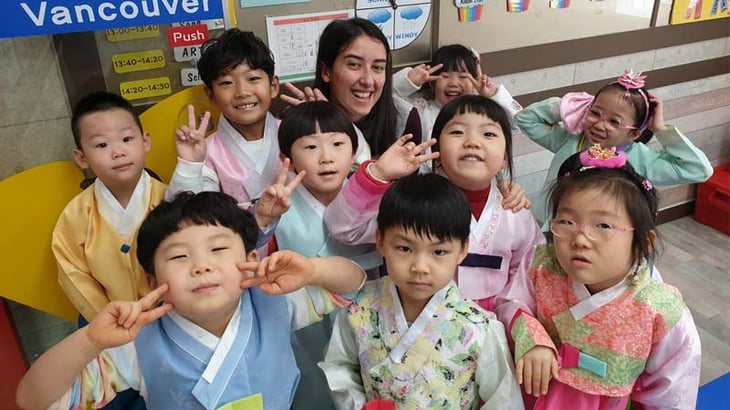

South Korea is one of the most rewarding and financially sound destinations for teaching English abroad. Beyond its competitive compensation packages and rent-free housing, South Korea offers modern infrastructure, historic mountain temples, a dynamic culinary culture, and an exceptionally well-organized visa system.
What Requirements Do You Need to Teach English in Korea?
To teach English in South Korea legally, foreign instructors must obtain an employer-sponsored E-2 Foreign Language Instructor Visa. The statutory minimum criteria set by the South Korean Ministry of Justice require citizenship from one of seven designated English-speaking countries, an accredited 3- or 4-year bachelor's degree in any major, a clean national-level criminal background check, and passing an in-country clinical health and drug test.
While the E-2 visa sets the legal baseline for entry, individual employers set specific academic and professional qualifications. Public school programs like EPIK require an accredited 100+ hour TEFL certificate (unless you hold a valid state teaching license or a degree in Education), while private language academies (hagwons) strongly prefer accredited TEFL credentials to stand out and negotiate competitive placement.
South Korea English Teaching Requirements at a Glance
| Requirement | Statutory E-2 Visa Criteria | Public Schools (EPIK) | Private Academies (Hagwons) |
|---|---|---|---|
| Citizenship | US, UK, Canada, Ireland, Australia, NZ, or South Africa | Designated 7 countries (English-medium proof if dual-language) | Designated 7 countries (or qualifying F-series visa holders) |
| Bachelor's Degree | Conferred BA/BS in any major (Apostilled) | Apostilled BA/BS + sealed university transcripts | Apostilled BA/BS in any major |
| TEFL Certification | Not statutorily required by immigration | Mandatory (100+ hrs) unless holding an Education degree or teaching license | Strongly preferred (120 hrs recommended for negotiation) |
| Criminal Record Check | Clean national check (Apostilled; <6 mos old) | Clean national check (<6 mos from contract start date) | Clean national check (<6 mos from visa submission) |
| Health Screening | In-country clinic exam (TB, HIV, drug test) | Self-statement pre-departure + in-country exam | Self-statement pre-departure + in-country exam |
| Passport Validity | 6+ months past intended departure | At least 18 months remaining validity recommended | At least 6–12 months past contract duration |
Read more: Step-by-Step Guide to Getting an E-2 Visa for South Korea
Requirements for Teaching English in Korean Public Schools (EPIK)
Public school teaching in South Korea is primarily coordinated through the English Program in Korea (EPIK), an official initiative affiliated with the Korean Ministry of Education. Accepted teachers are placed as guest instructors across elementary, middle, and high schools throughout South Korea, working standard daytime hours (8:30 AM – 4:30 PM, Monday through Friday) alongside a Korean co-teacher.
To qualify for public school placement through EPIK, applicants must meet the following official program standards:
- Citizenship: Must hold citizenship from Australia, Canada, Ireland, New Zealand, South Africa, the UK, or the USA. (Applicants from South Africa or dual-language territories must provide proof of English-medium instruction from Grade 7 through university).
- Bachelor’s Degree: Conferred degree from an accredited university. You will need to submit an apostilled copy of your diploma alongside official, unopened university transcripts.
- TEFL Certification: Minimum 100-hour accredited TEFL/TESOL/CELTA certification. Exception: Applicants who hold a Bachelor’s or Master’s degree in Education, or a valid elementary/secondary state teaching license, are exempt from this TEFL requirement.
- Clean Criminal Record Check: National-level criminal history check (such as an FBI check or RCMP certificate) with an apostille. Crucially, EPIK mandates that your background check be issued within six months of your contract starting date (not merely when you begin applying).
- Passport Validity: EPIK strongly recommends applicants possess at least 18 months of passport validity remaining from their anticipated date of arrival in Korea.
Read more: What is the EPIK Program for Teaching English in South Korea?
"The EPIK application process included gathering so many documents (it was intense), so the actual visa process later wasn't so bad. I gathered my sealed transcripts and apostilled criminal check, had my video interview, and visited the Korean Consulate in Boston before flying to Incheon."
— Samantha DiVito, ITA Alumna teaching in Cheongju, South Korea
 "The EPIK application process included gathering so many documents (it was intense), so the actual visa process later wasn't so bad. I gathered my sealed transcripts and apostilled criminal check, had my video interview, and visited the Korean Consulate in Boston before flying to Incheon."
Requirements for Teaching English in a Hagwon (Private Korean Academy)
Hagwons are private, for-profit language institutes operating outside regular public school hours. Representing the majority of English teaching positions in South Korea, hagwons hire native English instructors continuously throughout the entire year.
Because hagwon hiring is decentralized and conducted directly by academy owners or recruiters, qualification criteria offer more flexibility than public programs:
- Core Legal Requirements: You must still meet statutory E-2 visa standards: a conferred bachelor’s degree in any major, citizenship from one of the seven recognized countries, and an apostilled clean national criminal check.
- TEFL Certification: While private schools are not legally bound by public school mandates, academy directors overwhelmingly prefer candidates with an accredited 120-hour TEFL certificate. Having a credential that includes practical lesson planning gives you a distinct advantage when interviewing and negotiating terms.
- Interview Rapport & Schedule Alignment: Hagwon interviews focus heavily on personality, classroom adaptability, and willingness to work typical afternoon-to-evening schedules (typically 1:00 PM – 9:00 PM).
Read more:
- What is a Hagwon? Complete Guide to Korean Private Academies
- EPIK Public Schools vs. Private Hagwons: Full Comparison Table
— Anne Shelton, ITA Alumna teaching in Cheongju, South Korea
 "I'm working for Kids Club—a Hagwon chain in South Korea. They helped me get my E-2 work visa very quickly. There is plenty of paperwork to notarize and apostille in advance, but having everything organized made the consular process totally straightforward."
Required Document Authentication: The Hague Apostille
All English teachers entering South Korea on an E-2 visa must have their primary documents authenticated before shipping them to Korea. International document authentication is standardized through the Hague Apostille Convention.
Important Note for Canadian Citizens: Canada officially acceded to the Hague Apostille Convention in January 2024. Canadian teachers no longer require consular legalization through the Korean Embassy; Canadian diplomas and RCMP background checks are now directly apostilled through Global Affairs Canada or designated provincial authorities.
To ensure smooth processing through the Korea Immigration Service, prepare the following document packet:
- Bachelor’s Degree (Copy): Notarized and apostilled by the competent authority in your home country (e.g., your state's Secretary of State in the US).
- Sealed University Transcripts: At least two sets of unopened, official transcripts (mandatory for EPIK; good practice for all applicants).
- National Criminal Background Check: Apostilled federal check (FBI check for Americans, RCMP for Canadians, ACRO/Basic DBS for UK citizens) with zero criminal history, issued within six months of submission.
- Original Signed Employment Contract: Provided by your sponsoring school or education office.
- Passport & Passport Photos: A physical passport valid for at least 12–18 months past your departure, accompanied by passport-style photos taken within the last six months.
For more detailed data on average salaries ($1,500 – $2,500 USD/month), rent-free apartments, and living costs, explore our complete Teach English in South Korea Country Guide.
Frequently Asked Questions About Teaching in South Korea
Is there an age limit for teaching English in South Korea?
Under statutory immigration regulations, there is no strict upper age limit for an E-2 visa, though the official Korean national retirement age is 60. Public school programs like EPIK apply an upper age guideline (generally accepting applicants up to 62 years of age). Private hagwons set their own hiring preferences; while the broadest hiring volume is for instructors in their 20s and 30s, teachers in their 40s and 50s regularly secure positions, especially when bringing strong professional credentials, classroom experience, or specialized skills.
Can I teach English in South Korea if I don't speak Korean?
Yes. You are not required to speak or understand Korean to teach English in South Korea. In fact, English immersion is the standard teaching method across both public schools and hagwons, meaning classes are conducted entirely in English. Outside the classroom, South Korea’s bilingual signage, subway apps, and modern digital translation tools make daily navigation simple. Learning basic Hangul (the Korean alphabet) and simple polite phrases will greatly enrich your cultural experience.
Do I need an education degree or prior teaching experience?
No. You do not need a degree in education or professional teaching background to teach English in South Korea. The majority of native teachers in Korea are first-time instructors. While holding a teaching degree or state certification can qualify you for higher salary tiers within public programs like EPIK, completing an accredited 100+ to 120-hour TEFL certification provides the foundational lesson-planning and classroom management techniques required to succeed.
Can foreign teachers do private tutoring on an E-2 visa?
Under Korean Immigration Control law, foreign teachers on an E-2 visa are sponsored by a specific employer, and conducting unauthorized private one-on-one tutoring or moonlighting outside your contract is illegal. Engaging in unregistered private tutoring carries severe penalties, including steep fines and visa cancellation. However, instructors can legally supplement their income by teaching authorized corporate or test preparation classes (with immigration workplace addition approval) or by tutoring online students located outside South Korea.
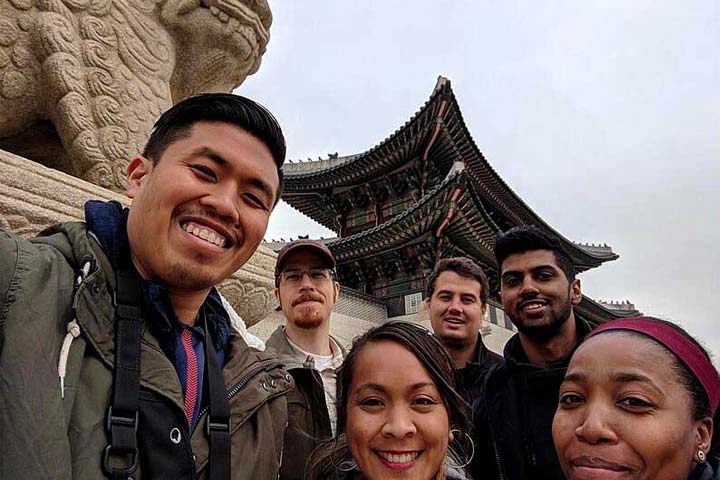
From Requirements to Departure: The 6-Step Application Timeline
Meeting South Korea's teaching requirements involves a specific sequence of document authentication, background checks, and visa processing. Here is the recommended step-by-step timeline:
- Research & Choose Your Program Path: Decide whether public schools (EPIK) or private academies (hagwons) best fit your goals. Public programs require roughly six months of lead time for fixed Spring (March) and Fall (September) starts, while hagwons hire and interview on rolling monthly cycles year-round.
- Enroll in an Accredited TEFL Course: Complete a recognized 100+ to 120-hour TEFL certification. Enrolling early gives you the required credential in hand when applications and interview windows open.
- Order & Apostille Your Documents: Request your national criminal background check (FBI for Americans, RCMP for Canadians) and order sealed university transcripts. Submit your degree copy and background check for state/federal Hague Apostilles.
- Interview Remotely via Video: Interview with schools and recruiters from your home country via Zoom or Google Meet. EPIK application portals open February 1 for Fall intakes and August 1 for Spring intakes, while hagwon positions interview year-round.
- Review Contract & Receive Your E-2 Visa: Carefully verify your 12-month contract details (salary, rent-free housing, flight allowance, paid vacation). Your school submits your apostilled documents to Korean Immigration to issue your Visa Issuance Number (VIN), which you submit to your regional Korean consulate for your E-2 visa stamp.
- Arrive in Korea, Complete Health Exam & Obtain ARC: Your school assists with airport arrival and settling into your officetel. During your first month, you will undergo an in-country health check and register at the local immigration office to receive your Alien Registration Card (ARC).
Posted In: Teach English in South Korea, Teach English in Asia, Teach English Abroad Visas, Teach English in South Korea Must Read

Want to Learn More About Teaching English Abroad & Online?
Request a free brochure or call 773-634-9900 to speak with an expert advisor about all aspects of TEFL certification and teaching English abroad or online, including the hiring process, salaries, visas, TEFL class options, job placement assistance and more.