




International TEFL Academy advisor & veteran English teacher Kenneth Parris shares 10 fascinating tips and facts he's picked up while living and teaching English in Thailand through ITA's Guaranteed Job Placement Program.
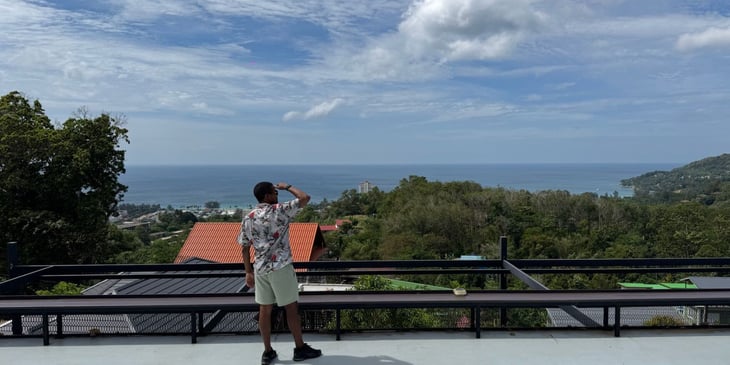

When living in another country, you will encounter all sorts of fascinating quirks, surprises, and cultural differences. When I first lived abroad in Prague, Czech Republic, I felt like I noticed something unique about the lifestyle there every other day. I knew there was no way I’d be able to remember it all when I’d eventually have to tell stories upon my return home. So, I started keeping a list in my phone of anything notable that I’d come across during my international travels. This has become a truly fun activity for me that I continue every time I travel abroad.
So, in line with tradition, I’m happy to introduce ten new things I have learned while teaching English in Thailand. From historical context and culture to important food insights, I hope this can serve as a helpful resource for anyone looking to explore and enjoy this amazing country today.
10 Things You Should Know When Living in Thailand
1. Pad Thai, the National Dish
Let’s start with a topic we can all relate to… food. As ubiquitous as Thai restaurants are throughout the world (this is actually by design and the Thai government’s “gastrodiplomacy” initiative during the early 2000s), chances are you’ve heard of, or even eaten, Pad Thai. Hearty and flavorful, this popular food can be found on menus throughout Thailand, and you won't have to spend much more than 65 baht ($2) on it. It is the official national dish of Thailand, and has an interesting culinary history.
What are the origins of Pad Thai?
Perhaps surprisingly, Pad Thai is a fairly recent creation (less than 100 years old). Not only that, it was a political creation! The exact timing is debated, but the advent of Pad Thai came about between the 1930s and 1940s. Thailand was less than a decade removed from a coup, and Prime Minister Plaek Phibunsongkram was desperate to develop a sense of national pride and identity.
So, he focused on creating a national dish that would become synonymous with Thailand. There are competing theories about why Pad Thai became Thailand's national dish. Some say it was originally due to a rice shortage, allowing noodles to take center stage. Another theory is that the prime minister wanted to pick a dish that would be palatable to the masses and not too spicy. My personal favorite is that he was enamored with Italian culture and wanted to model Thailand’s national dish after spaghetti! Whatever the reason, Pad Thai prevailed and is here to stay.
2. Why is Thailand called "Thailand"?
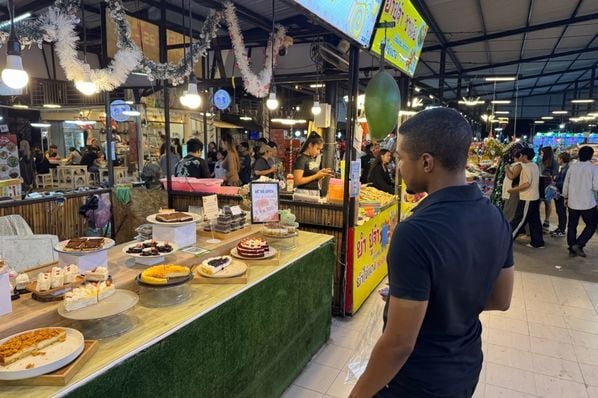
The ancient name of Siam was changed to "Thailand" in 1949 under Prime Minister Plaek Phibunsongkram - the same guy who made Pad Thai the national dish! If you split present-day Thailand in half, Siam was the country in the bottom half (where Bangkok is), while the top half was the Lan Na Kingdom (where Chiang Mai is). Eventually, Siam took control of Lan Na, and it all became one country as we know it today. So then what does Thailand mean? It’s actually quite literal, “land of the Tai/Thai.”
It has a double meaning: “Tai” refers to an ethnic group of the region's early inhabitants, while “Thai” means “free.” Both meanings represent a source of national pride, as the former boasts a sense of ownership that Thai people have of their land. The latter, "Land of the Free," can be considered in the context of Thailand’s proud and distinct honor of being the only Southeast Asian country never colonized by a European power. You can still find the name Siam in restaurant or business names, maintaining a level of connection to the country’s long history and ancient past.
*Bonus Fact: Did you know the term “siamese twins” came from the name Siam?! Look it up to learn more.
3. What is the Population of Bangkok?
Thailand has a population of 71 million people. Its capital city, Bangkok, has the most residents with 11 million in the greater metropolitan area. Some estimates are even higher than that number.
What’s interesting about the population is what happens next. Thailand is cited as the country with the largest population discrepancy between its first and second largest cities. Chiang Mai is often regarded as the second largest or most populous city, but the difference in population size is a whopping 1000%! So you go from 11 million (or more) in Bangkok, to just over 1 million in Chiang Mai. If you don’t include the surrounding suburban areas and just count the cities themselves, the gap is even bigger percentage-wise.
4. Driving May Look Familiar to UK Citizens
Though I mentioned earlier that Thailand was never colonized (a big point of local pride), it was still influenced by the British, who took a stake in neighboring countries. As the British colonized Burma (present-day Myanmar), Thailand maintained friendly, diplomatic relations with them to keep things cool. Those relations led to the adoption of certain customs and practices, such as driving on the left side of the road.
5. How do You Get Around Bangkok?
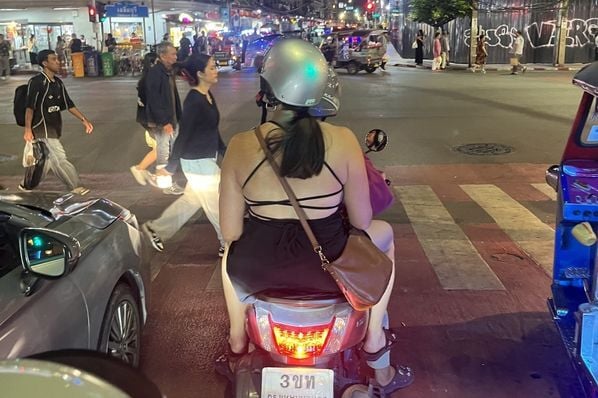
Thailand has two popular rideshare apps that locals and tourists use in Bangkok, Grab and Bolt, but the fact is undeniable: motorbikes are the quickest (and cheapest) way to get around the city!
On both rideshares, you can choose to be picked up by a car or a motorbike. I can speak from experience in Bangkok, where I’m based, and say that the traffic is no joke! It feels like at any point in the day, you could be stuck in a bumper-to-bumper traffic jam. That is, however, if you’re riding in a car. If that is the case, you’ll notice a constant flow of motorbikes weaving in between the cars and getting ahead at a much quicker rate. Is it a little scary riding on the back of one? Depends on who you ask.
6. Spas on Every Block
If you didn’t already know, Thailand is the epicenter of massages! Thailand is renowned for this skilled profession, to the point that it has its own “Thai massage,” which is offered at every spa. The defining characteristic of a Thai massage is the chiropractic-like stretching sequence that they perform.
Having a signature massage isn’t the biggest thing that stands out about the culture, though. Instead, it’s the sheer number of massage spas found spread across every neighborhood. Not only can you find one on every single street, but there are several of them on a street. Sometimes there are multiple spas side-by-side! It’s a bit confusing to see how multiples of the same business type compete against one another, but in Thailand, this is the reality for massage spas.
It’s great as a customer because, in addition to the ease of getting a massage, the high volume of them helps keep the price low (and it’s LOW!). However, from a different lens, it is a bit sad to see the employees often sitting outside and desperately hoping that each passerby stops in to give them business. The supply definitely outweighs the demand, and for this reason, they seem to go long stretches without any customers.
*Bonus Tip: If you’re heading to Bangkok's Suvarnabhumi Airport (BKK) and have a long journey ahead, you can take some comfort in knowing that you can also get a massage at the airport!
7. Know When To Use a Fork and Spoon
Pad Thai is one of the few dishes in Thailand for which chopsticks are used. Many of the other dishes use a spoon because they’re soup-based, or a fork to eat rice with. There are those occasions, though, where you do have to do some cutting and will naturally reach for the knife. The problem is…there is no knife! Knives are just not a common utensil in Thailand, especially in traditional restaurants (you can find them in more touristy areas).
It could be the most appropriate time to use a knife, such as cutting a chicken breast, and you will only have a fork and spoon at your disposal. The cultural reasoning is that the fork is used to push food onto the spoon, which is then used to eat. Moreover, much of the food is already chopped up, so there isn’t much left for you to cut. Stay here long enough, though, and you’ll be in several situations where a knife is the more logical option; however, you learn quickly how to operate without one.
8. What is The Thai "Bum Gun"?
Without going into too many specifics on how to use it, the general idea is that a gentle rinse with the bum gun can replace the need for high toilet paper usage. You still can use toilet paper, but much less will be required after using the bum gun.
This is a bit of an…interesting topic name. It really should be called “bum hose,” but I digress. So what is this all about? Well, in Thailand, the bathroom pipes are smaller than those in the West, which can lead to clogging if tissue is repeatedly flushed down the toilet. To combat this problem, every bathroom in the country (whether in your home or at a restaurant) is equipped with a hose-like device by the side of the toilet. This is the famed Thai bum gun.
From there, the little bit that you do use is tossed into the trash. It’s a different approach…very different. But it’s a much better option than dealing with plumbing issues if you don’t follow it. You can still use toilets as you’re normally used to, like if you stay in a nice hotel when you go on weekend trips. Evidently, the pipes in hotels are larger, so the toilets can handle more. Some may have signage in the bathroom that would inform you otherwise, though, so just look out for that.
9. Cash is King in Thailand
Thailand has many modern conveniences and, as one of the most visited countries in the world, caters greatly to tourists. There are, however, some things that still feel like a relic of the past. One of those is the lack of acceptance of credit/debit cards in businesses. It certainly doesn’t happen everywhere, and your card will be accepted at higher-end restaurants or in clothing stores at the malls.
But you’re in Thailand, and market culture is HUGE, so you will absolutely find yourself spending on food or clothes at the market stalls. In these instances, you absolutely need cash. It’s not only limited to the markets, though, as many of the traditional Thai restaurants (which you definitely want to eat at, for cost and taste) will only accept cash as well. Even convenience stores like 7-Eleven have a minimum spend amount for you to be able to use a card, so again, cash reigns supreme. The great thing is, there are ample opportunities to withdraw money as there are ATMs on many streets, plus at every 7-Eleven.
10. The Magic of 7-Eleven
Speaking of 7-Eleven, it truly is the most convenient convenience store available in the country. They are EVERYWHERE! Want a personal example? In my neighborhood, there are five 7-Eleven stores within a 15-minute walk of one another. FIVE.
The only businesses that seem to beat them out in quantity are the massage spas. Bear in mind that in the U.S., 7-Eleven does not enjoy the same status and popularity that it enjoys in Thailand. They are convenient, yes, but not somewhere you go regularly. Whereas in Thailand, everyone uses them (maybe because they are so in-your-face), they are pretty nice!
One standout feature is the pre-cooked meals. You can get classic Thai dishes, which seem to be cooked that day, wrapped and ready to go, for really cheap. Thai food is already affordable at traditional Thai restaurants, but even less at 7-Eleven. Chances are, if you’re living in or visiting Thailand, there will be a 7-Eleven within a 5-minute walk.
This wraps up the first set of fun, interesting, historical, and cultural points about this fascinating Southeast Asian dream destination. Since one list isn’t enough to capture all the notable elements of the country, there will be more to learn in 10 Things About Thailand (part 2).
Go further:
- Requirements to teach English in Thailand
- How Much Money Can You Earn & Save Teaching English in Thailand?
- What Type of Visa Can I Use to Teach English in Thailand?
Posted In: Teach English in Asia, Teach English in Thailand, Hua Hin, Bangkok, Teach English in Thailand Must Read

Want to Learn More About Teaching English Abroad & Online?
Request a free brochure or call 773-634-9900 to speak with an expert advisor about all aspects of TEFL certification and teaching English abroad or online, including the hiring process, salaries, visas, TEFL class options, job placement assistance and more.