
Length of training: 4 weeks,
Tuition: $ 1,799, $ 200 discount this month:
$ 1,599 ($ 600 Deposit, $ 999 Balance) (housing costs are not included)
More information on TEFL Course Dates
Costa Rica TEFL Course
Earn an internationally recognized and accredited TEFL Certification at our Costa Rica TEFL training center conveniently located just outside of the capital of San Jose in the historic city of Heredia. Known as "Ciudad de las Flores" (City of Flowers), Heredia is famous for its magnificent landscaping, laid-back lifestyle and beautiful colonial architecture. Heredia is the a quick drive from downtown San Jose and essentially the nearby beautiful suburb.
Heredia
Founded in 1704, Heredia provides an ideal combination of all that Costa Rica has to offer from an array of cultural and natural attractions to an exciting nightlife, a safe environment and convenient access to some of the nation's most notable landmarks, including the Poas Volcano, the La Paz Waterfall Gardens, Barva Volcano, and Inbio Park just to name a few. Many locals and visitors alike prefer living in Heredia over San Jose because of its tranquil nature and reputation for safety.
One of Costa Rica's many great attributes is that everything is located within a short distance from the Central Valley. Below is a short list of popular destinations and how long it takes to reach each one by bus:
- Heredia TEFL school to Heredia downtown: 10 mins by bus
- Heredia TEFL school to largest mall in Costa Rica: 12 mins by bus
- Heredia TEFL school to San Jose: 40 mins by bus (2 buses)
- Heredia TEFL school to the airport: 45 mins by bus (2 buses)
Typical Costs:
- Bus: 0.40 cents to $1
- Bottle of coke: $1
- Beer at a bar: $2
Travel
During your TEFL course you will enjoy opportunities to explore many of Costa Rica's greatest attractions, particularly during the weekends.
- Jaco Beach: 2 hours
- Manuel Antonio National Park: 3 hours
- Arenal Volcano: 3 hours
- Monteverde National Park: 3.5 hours
- Puerto Viejo: 4 hours
- Tamarindo: 4.5 hours
Costa Rica TEFL TESOL Training Center:
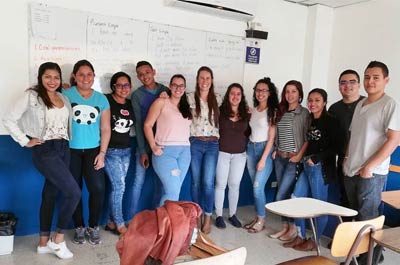
Our Heredia Costa Rica TEFL certification center is located at our English language school where student are afforded the opportunity to work with local ESL students as part of their student teaching.
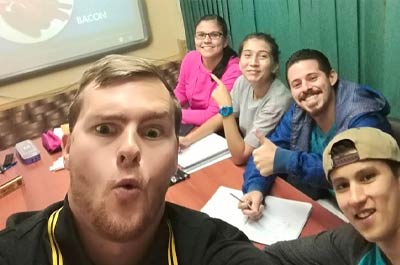
TEFL classes are held Monday - Friday for a full day of classroom work, practice teaching, role playing and group discussions. Classes are taught by highly qualified instructors and feature low teacher-student ratios to ensure the quality of instruction and interaction. The course follows an immersion method where trainees develop their teaching skills and knowledge of grammar through a combination of morning input sessions and practicum (practice teaching) in the afternoon.
During input sessions students are engaged in the class by frequently breaking into small groups to create teaching materials and practice teaching techniques.
During afternoon practicum sessions, trainee teachers practice the skills and methodology learned during the input sessions while working with genuine EFL students and following an official curriculum.
All practice teaching sessions are fully observed by our highly qualified trainers, who provide each student with personalized feedback and instruction.
A strong emphasis is placed on continual assessment and participants are expected to address the issues raised from previous feedback in their future lessons.
The course is divided into six modules:
- Classroom management
- Teaching skills
- Language awareness
- Grammar
- Unknown language
- Teaching practice

Tuition fee covers:
Tuition does not cover:
- Personal Expenses
- Course Book
- International Flights
- Visa, Insurance,
- Housing costs are paid directly to the hostel, homestay or hotel in Heredia

Accommodations:
Following enrollment, we can assist you in finding housing for your month of training with options available for independent living or shared space. You can also choose to extend your stay past the original month if you care to.
The Most Popular Choice: Shared Housing
All of our families are wonderful and welcoming people who look forward to hosting you in their homes. Three hearty meals, a safe location and no curfews are guaranteed with each homestay! We also know one of the primary reasons that people come to Costa Rica is to learn and perfect their Spanish. Our host families are well aware of this and are excited to help you achieve your goals regarding your Spanish language skills. You will stay in a private room and share the residence with other students.
Approximate Cost: $ 500/month
Apart-Hotel Roma
The quietest and most private option. This option lets you go back to YOUR OWN place at the end of the day and unwind in whatever way you like. Great for people who like being around people, but who need to have their own sanctuary to “turn off” sometimes. Includes a large fully furnished apartment with kitchen and daily cleaning services and laundry facilities.
Approximate Cost: $ 690/month http://www.apart-hotelroma.com/index.htm
Hotel Monte Campana
Located approximately 5 km north of the school, this local hotel has a lot to offer for a great price. It is situated within some of the best views of the mountains in an area known for ATV riding, horseback riding, rappelling and canopy tours. This hotel offers a swimming pool, Jacuzzi, courts for tennis, basketball and football, abseiling, a ropes garden, a Canopy, a trail to a waterfall, a bar, and a restaurant.
Approximate Cost: $ 30/day http://www.hotelmontecampana.com/
Other Hotels: 
There are several other hotels located very near the school. All recommended options are clean, safe and very reasonable. Prices do not include food.
Food:
In Heredia and San Jose, participants need not worry about food due to the numerous restaurants through out the city offering varied menus, excellent service and very inexpensive options - participants can eat for as little $5-$15 per day (note: the food and local color at the central market is NOT to be missed). There are also numerous restaurants offering international fare.
Internet/Telephone/Medical Facilities
Modern telecommunications and banking services are widely available throughout Heredia and Costa Rica.

Extra Curricular Activities:
- Café Britt Coffee Tour: 5 mins by bus
- Barva Volcano: 1 hour by bus
- Paintball: 20 minutes by bus
- Theater: 20 minutes by bus
- Bars and nightclubs: 15 minutes by bus
- Canopy: 30 minutes by bus
- Poas Volcano: One hour thirty minutes by bus
- La Paz Waterfall Gardens:
One hour thirty minutes by bus
- Jaco Beach: Two hours by bus
- Arenal: 3 hours by bus
- Nicaragua: 7 hours by bus
- Looking for Spanish, dance, cooking and guitar lessons?
Festivals:
January is by far the most exciting month when it comes to festivals. Our location in Heredia celebrates a two week festival during the last two weeks of every August. 
Culture & People
Many foreigners have fallen in love with the country and the culture of Costa Rica, which blends Spanish influence with indigenous and Afro-Caribbean traditions. Affectionately known as "Ticos," Costa Ricans are known for their warm hospitality, sense of humor and laid-back nature, and in one recent survey featured on CNN and in The New York Times, they were even named "the happiest people in the world."
The country boasts a population close to 3.5 million people, which by standards of the region, is not large at all. El Salvador, for example, is half the size of Costa Rica, but it has double its inhabitants. Also, the growth rate of the population of Costa Rica is only 2.3% per year, and it's actually decreasing.

Costa Rica is largely homogeneous when it comes to social classes and the vast disparities of wealth and income found in other Central American nations is not prevalent here. Most of the population can be placed in a middle-class, and poverty is limited, particularly by regional standards. By the standards of a developed country, Costa Rican incomes are modest, but the cost of living is low making it possible for the majority of Costa Ricans (as well as TEFL trainees and English teachers!) to enjoy a high quality of life. This enables Costa Ricans to pursue educational opportunities, including the study of English.
While most Ticos frown upon religious fanaticism, they identify strongly with their Catholic traditions and most national holidays and festivals revolve around traditional celebrations. Annual highlights include Easter, Christmas and the pilgrimage to the Basilica de los Angeles in Cartago city, when the faithful flock to Cartago from all parts of the country to offer a "promise" to the Virgin and to renew their faith.
| GOVERNMENT: |
Democratic Republic |
| OFFICIAL LANGUAGE: |
Spanish is the official language and spoken throughout the country. English, Creole, and Indian languages are spoken as well. |
| MAJOR RELIGION(S): |
Roman Catholic 77%, various form of Christianity 16%, other 7% includes Buddhist, Muslim, Jewish, and Agnostic. |
| MAJOR ETHNIC GROUPS: |
94% European and Mestizos, 3% Afro-Costa Ricans, 1% Amerindian, 1% ethnic Chinese. |
For more information on the culture and business etiquette go here:

Food
Given its abundance of excellent produce and fresh seafood, Costa Rican cuisine is both tasty and healthy. Preeminent dishes include black beans and rice (gallo pinto), plantains and Arroz, a dish of fried rice often served with chicken (pollo) or shrimp (gambas). Traditionally Ticos make lunch the main meal of the day. In fact, many employers will give an additional hour off for employees to enjoy a casado, a traditional meal that "marries" an array of beans, rice and meat.
San José, in particular, offers a broad spectrum of dining options from fine dining and international cuisine to colorful markets, cafes and streets lined with sodas, or small restaurants that serve light meals and tasty snacks.
Costa Rica is particularly famous for its exquisite fruits, ranging from papaya, mango, piña (pineapple), sandía (watermelon), and melón (cantaloupe), to moras (blackberries), limones (lemons), guayaba (guava), granadilla (passion fruit), and aguacates (avocados). Many of these are served plain, in salads and stews, or as a refresco, a blended drink with ice.
Demand for English teachers with accredited TEFL qualifications is on the rise worldwide and Costa Rica is no exception. All students receive personal job placement assistance and our TEFL graduates seldom encounter problems finding employment.
For most Costa Ricans, speaking English is a means to gain employment and advance their careers. Because Costa Rica is a major tourism destination and center of commerce; English is a modern necessity for nearly all Costa Ricans creating almost limitless ESL jobs available, particularly in San Jose and the Pacific coastal areas.

There are more than 25 official language schools in San Jose itself, as well as countless public and private schools and NGOs offering English classes. There are also excellent teaching opportunities in other cities - especially those on the Pacific coast.
As a teacher or private tutor, you'll be hired to help the student learn to speak correctly. You will also help build the student's vocabulary. Costa Rican English language schools prefer hiring a native English speaker because of the need to pronounce words correctly.
Canadians and Americans may sell professional services while living in Costa Rica. This requires them to sign up with Tributacion, a government branch that oversees income taxes. All teachers will be required to files their taxes in October. A 10% tax is paid if yearly earnings exceed 2,800,000 Colones (about $ 6,000 USD.)
Teaching English falls under selling professional services.
To learn more about teaching abroad and TEFL Certification go to our form to request a brochure.

* Many of our photos are provided with the permission of Costa Rica Beauty. S.A. and Costa Rica Beauty LLC.