What is the TEFL Practicum?
Watch the video for an introduction to the Practicum
(Live Practice Teaching) section of the Online TEFL Class.
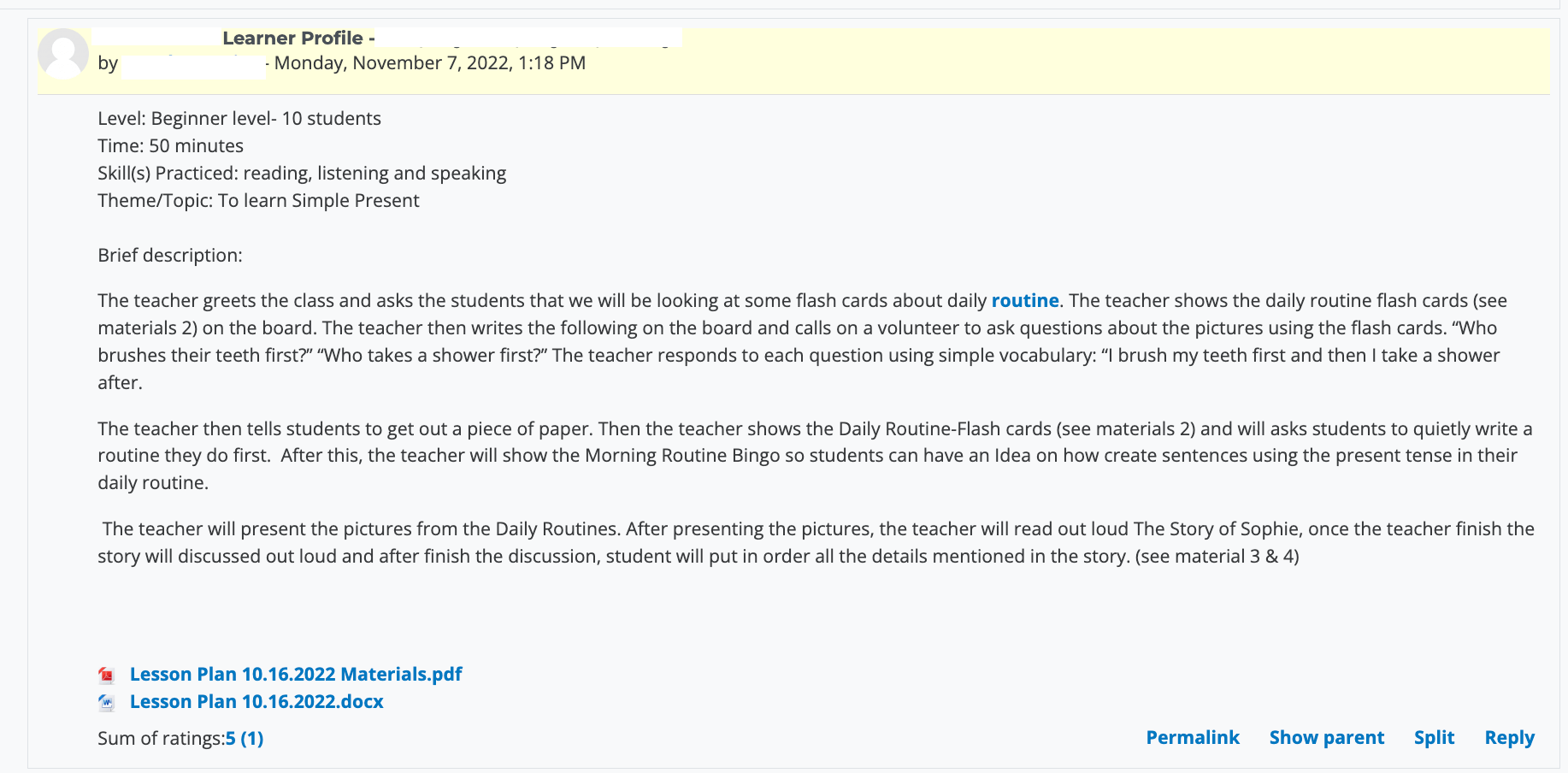
Practicum is an essential component to a teacher's training process, as it provides valuable insight and experience prior to obtaining independent teaching positions. International TEFL Academy requires that all students accumulate a minimum of 20 hours for TEFL/TESOL certification. These hours can be achieved through observation, tutoring, student teaching or a combination of 2 or 3 of these in an ESL/EFL setting in which non-native speakers are learning new English language skills.
Hands-on experience with English language learners provides an opportunity for teacher trainees to apply teaching principles to real-life situations, build confidence in their skill and pedagogical style, gain exposure to various learning styles and classroom situations, and acquire valuable teaching experience. These components will assist a teacher in feeling more prepared, as well as add a competitive edge during one's job search and interview process.
Please refer to the "MANDATORY UNIT: Practicum Requirements" drop-down above for additional details.
How do I find a practicum location?
You can do a web search for English language classes offered in your community. You will find that many different organizations will offer English classes to non-native speakers. Some examples of class sites are language schools, ethnic community centers, community colleges, park districts, local libraries, and faith-based organizations such as churches, mosques or synagogues. You may also find a non-native English speaker to whom you can offer one-on-one tutoring.
Does ITA assign a practicum location for me?
No, ITA does not assign a practicum location for its students. One benefit of taking the online course is its flexibility, as many students are working or taking other courses concurrently. Because of this, it would be difficult to arrange hours and locations around every individual schedule. Another reason why ITA does not assign a practicum location for students is because we have students from all over the world participate in our course. Therefore, you are free to find a location close to you and arrange hours at your convenience, whether they may occur during the day or in the evenings, or over the weekend.
Do I have to do my practicum hours at a specified, ITA-approved center?
You do not have to complete your practicum at specific locations. We are flexible with accommodating your experience, and it does not matter if you are observing, tutoring or student teaching in Kansas or in Argentina – just as long as you are working hands-on with real-life English language learners.
Do I need to do all of my hours after the course?
You do not need to wait until you have completed your certification to begin your practicum hours. Students may begin their practicum as soon as the course starts; at this time, it is advised to begin your practicum experience with observation hours unless you are an experienced EFL/ESOL teacher.
Do I need to do all of my hours at the same location?
You can do your hours at different locations if you choose. Some students prefer the continuity of remaining at one location throughout the duration of their practicum, while others enjoy experiencing diversity in their students and class types and opt to divide their 20 hours among various locations. Others’ choice of whether or not to do their practicum at one site depends on their professional, academic, and social schedules and whether or not English classes that are offered will conflict with their schedules.
Do I have to do all of my hours all at once?
Just as you can work on your practicum hours at various locations, you can also conduct your observation, tutoring, or student teaching at various times. You can begin your hours as soon as the course starts and you have up to 90 days after the course has ended to complete your practicum. Some teacher trainees prefer to wait until they have been enrolled in the course for some time before they feel comfortable enough to work with English language learners, while some will begin as soon as the course starts and ease into English classes by doing some observation hours in the beginning. Others wait until the course has ended and will work on their practicum during the 90-day period after certification due to schedule constraints.
Do I need to choose just one facet of practicum experience, or can I mix and match?
You can choose to perform one facet of practicum, though we do encourage students to try and participate in all three to gain a wider perspective and build as much varied experience as possible.
I currently teach; can my classroom hours apply toward my practicum?
Your current classroom hours will apply toward your practicum only if you are teaching English skills to non-native English speakers. For example, if you happen to have an English language learner in your Algebra class, then those hours will not apply toward your practicum. Additionally, if you are an English teacher, but do not have any English Language Learners in your class, then these teaching hours will not count, either. On the other hand, if you are a Biology teacher and you are offering extra tutoring assistance to an English language learner, then this time spent will count toward your practicum.
I have taught in the past; can those hours apply toward my practicum?
We do require that you complete your practicum hours concurrently with the course. However, if you have had extensive TEFL/TESOL experience locally or abroad, then you may have a portion of your practicum hours waived. This situation will be determined on a case-to-case basis, so please speak with an advisor from the Student Affairs department to gain approval and authorization.
How will ITA verify my practicum?
ITA will provide specific documents on which you will log your days and hours of observation, tutoring, or student teaching. These time log forms must be signed and verified by a cooperating teacher or tutored student. Additionally, a brief evaluation form will be provided that your cooperating teacher or tutored student must complete about your experience. Lastly, you will complete an assignment, for which you will be required to write a reflective essay on your experience.
Where can I obtain the necessary documents to submit to ITA?
The required documents can be found online in the ITA TEFL Practicum section. Log on to learn.internationalteflacademy.com to find all of the necessary documents you will need to submit.
What other steps do I need to do to complete my practicum hours?
Please refer to the TEFL Practicum Checklist for a list of items you need to complete. You can find the checklist online in the ITA TEFL Practicum section. Log on to learn.internationalteflacademy.com to find the checklist.
What if I choose to do 20 hours of tutoring with an English language learner; how will he or she complete the evaluation form?
There is a specific form that is used for tutoring. Your ESL student will need to complete the evaluation regarding his or her experience learning from you.
Can I receive an extension on my practicum hours?
ITA gives 90 days after the course has ended for students to complete their practicum. If you still have not completed your 20 hours during this timeframe, please fill out the extension form located online in the ITA TEFL Practicum section. Log on to learn.internationalteflacademy.com to find this form.
How many ESL students do I need to work with?
International TEFL Academy does not have a minimum or maximum amount of students that you are able to work with. You can work individually with one student, or even teach large classes of 20 - 30 students. The choice is ultimately up to you.
Can I complete my practicum in a foreign language, math, science, etc. classroom?
Students may only receive credit for their practicum hours if they complete their practicum in an environment or classroom where non-native English speakers are learning the English language. Any hours spent in another environment or classroom that does not meet these requirements, will not receive credit for their practicum hours.
Many practicum locations or organizations require their volunteers to participate in an orientation or training program before they begin observations, teaching, or tutoring. Am I able to count this towards my 20 practicum hours?
Practicum hours must solely consist of observation, teaching, or tutoring. Any orientation or training hours do not count towards the 20 practicum hours.
Can I observe ESL classes at International TEFL Academy?
TEFL students may not observe ESL classes at ITA and must find a separate organization or students.








.png)