

Back to Main Page of Prague TEFL Course
More information on TEFL Course Dates
Testimonials: Interested in what our TEFL Class graduates have to say about our course?
Read their class testimonials.
Length of TEFL training: Full-time: 4 weeks, 130 hour course

For those who have never taught before, the idea of managing a language class (especially if you don't understand your students' language) probably appears like a daunting task. In reality…it can be! The internationally recognized TEFL certificate course offered by International TEFL Academy's partner school has been specifically designed to ease this process and in one month turns apprehensive applicants into confident, professional teachers. However, this in turn equals a lot of hard work, and our TEFL course is more demanding than most of the other schools in the city.
Specific categories taught in the class:
-
Language awareness
-
Teaching grammar, reading, writing, listening, speaking, pronunciation
-
Teaching one-on-one students
-
Teaching group classes: beginner, pre-intermediate, intermediate, advanced
-
Business English
-
Lesson planning
-
Time management
-
Classroom Management
-
Using video, audio and outside resources
-
Effective use of textbooks (not just reading them)
Main components of the Prague TEFL course are:
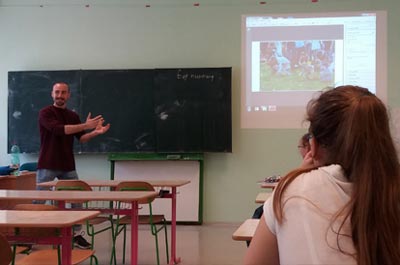
1. Actual observed teaching practice by our trainers of students at three different language abilities. Teaching length begins at 20 minutes and ends with an optional 90-minute practice sessions. Following this, each student has a one-on-one feedback session with the teacher-trainer where they receive oral and written comments and suggestions. Classes have about 4 to 10 practice students.
2. Teaching practice of a single student. Since one-on-one teaching is very common in the EFL field, trainees will have to complete at least two 60-minute one to one lessons. We actually take you to bank managers and employees in the city and have you conduct private lessons with them.
3. Acquisition of teaching methodology
. Roughly 65% of the classroom workshops involve teaching the most essential EFL basics to advanced classroom techniques. Interestingly enough, the procedures used to teach the trainees are the procedures that will be used when they teach a classroom. This makes all workshops highly dynamic, interactive classrooms, where the trainee just doesn't read or hear about methodology, but actually has it demonstrated on them. Teaching methodology is demonstrated by video, audio, guest speakers, weekly assignments, and field trips.
4. Language awareness. Can you tell me three differences between the present perfect continuous and its simple form? Probably not, right? Most intermediate to upper-intermediate English students probably would be able to without a great deal of difficulty. What is surprising, though, is that even many TEFL graduates upon passing other TEFL courses still cannot answer this basic grammatical question. How do we know? We ask it when we interview new teachers for our school.
Do you know how many non-experienced TEFL graduates have answered the question correctly…..0. All native speakers instinctively know and use grammar properly, while awareness and understanding of English is virtually nonexistent. Many TEFL courses opt to brush over grammar basics or, at times, leave it out completely with the idea that the graduate will pick it up later as they have more experience. This results in teachers who either fail a job interview or who have students with greater grammar knowledge than they have.
Language awareness covers about 1/3 of classroom workshops, which is followed by a comprehensive grammar test. All trainees must score 80% or higher to successfully pass the course. On the event of a fail, each trainee is allowed two chances on equivalent exams, which they can take after the course.
5. Observation of experienced teachers.
Trainees observe a trainer in action on a weekly basis. This serves to show trainees how a productive classroom is supposed to look and sound. The teacher's lesson plan is synchronized with what methodology had been taught in the previous workshops. This enables students to not only to learn about specific teaching techniques, but also see them practiced in a real setting. Trainees are given observation worksheets and then give feedback to the trainer on what they saw and what worked!
Back to Main Page of Prague TEFL Course
More information on TEFL Course Dates